
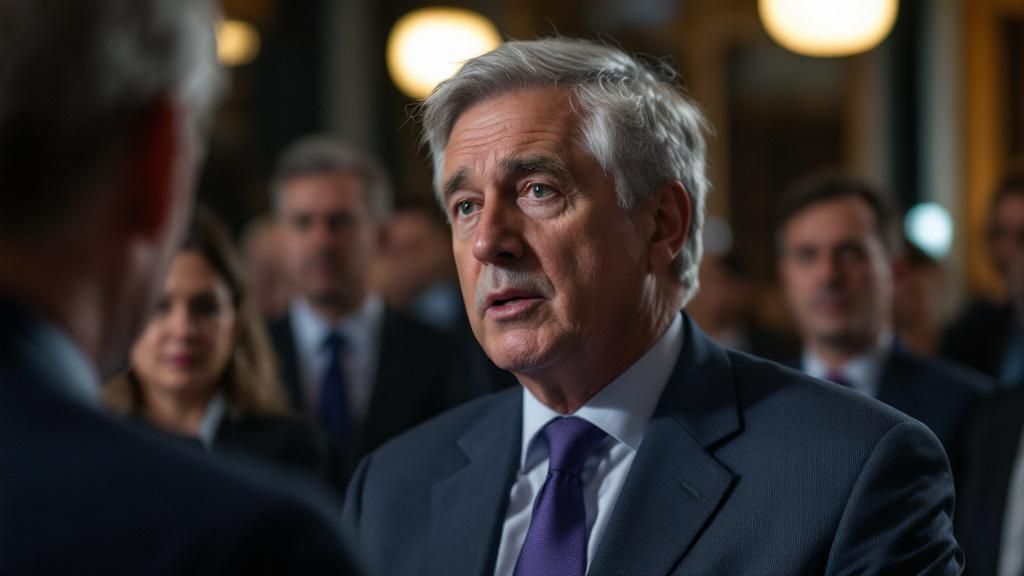
As households throughout the country struggle with skyrocketing energy bills and inflation climbing to unprecedented levels, the opposition leader has launched a biting attack on the Government’s handling to the cost of living crisis. In a fraught parliamentary confrontation, the Labour party has questioned the administration’s insufficient support measures, demanding more meaningful action to help struggling families. This article explores the intensifying divisions relating to the crisis and explores the competing visions for economic relief.
The Opposition’s Assessment of Government Policy
The leader of the opposition has stepped up examination of the government’s handling of the mounting cost-of-living emergency, asserting that existing policies fall woefully short of addressing the extent of difficulty impacting British families. During parliamentary exchanges, the opposition has set out a detailed critique covering inadequate financial support, inadequate action in the energy sector, and a perceived lack of commitment to combating inflation. The opposition argues that whilst households grapple with unprecedented bills, the government’s fragmented strategy merely patches symptoms rather than dealing with fundamental causes of economic distress.
Central to the opposition’s argument is the claim that the government has seriously underestimated both the scale and length of the crisis. Opposition representatives have pointed to figures indicating that millions of people now face genuine hardship, with many obliged to select between warmth and food. The opposition maintains that the government’s early action underestimated the crisis’s impact, producing support mechanisms that turned out to be insufficient when conditions worsened further. This miscalculation, they argue, demonstrates wider shortcomings in economic forecasting and policy preparation.
Insufficient Support Measures
The opposition has specifically targeted state assistance programmes as insufficient and poorly targeted, maintaining that energy price cap mechanisms fail to protect those on lower incomes sufficiently. Commentators highlight that whilst the government has introduced different funding schemes, such as grants and council tax rebates, such provisions deliver limited reprieve without tackling systemic issues. The opposition maintains that eligibility-based assistance remain excessively narrow, shutting out millions of families in work who yet contend with rising costs. Furthermore, they argue the government’s approach lacks the boldness necessary to confront such an unprecedented economic challenge.
Opposition analysis proposes that present welfare systems negatively impact those earning mid-range salaries who miss out on eligibility thresholds for means-tested support. The party has put forward new models centred on across-the-board allowances, enhanced benefit programmes, and public sector action in energy markets to stabilise prices. They stress that temporary measures, whilst welcome, fail to replace deep-rooted transformation. The opposition maintains that in the absence of significant law changes and enhanced government funding, households will keep facing severe money pressures in the coming period.
Long-range Financial Strategic Concerns
Beyond pressing crisis intervention, the opposition has raised fundamental questions regarding the state’s long-term economic direction and competitive position. Opposition analysts argue that the existing strategy emphasises near-term political appearances over sustainable economic planning, potentially compromising Britain’s future prosperity. They contend that without strategic investment in renewable energy infrastructure, productive capacity, and workforce development, the nation risks extended economic stagnation. The opposition emphasises that managing cost of living difficulties requires wide-ranging reforms tackling productive efficiency, creative advancement, and economic sector development alongside immediate relief measures.
The opposition has outlined concerns that government policy is fragmented across different sectors, with energy policy, industrial strategy, and fiscal measures functioning separately rather than as coordinated elements. Critics argue this fragmented approach prevents effective addressing of underlying inflationary pressures and fundamental economic problems. The opposition advocates for a integrated strategic framework encompassing energy transition, manufacturing revival, and skills development. They maintain that genuine crisis resolution demands transformative policy reform rather than gradual modifications to existing frameworks.
Government’s Defence and Counterarguments
The government has firmly defended its economic strategy, arguing that the cost of living pressures are primarily driven by international forces beyond Westminster’s direct control. Ministers have highlighted the extraordinary scale of the energy crisis, arising from geopolitical conflicts and worldwide supply chain interruptions. They argue that their focused assistance measures, including the energy price ceiling and cost of living payments, represent a prudent and financially sound approach. The Government Treasury maintains that excessive spending could worsen inflation to a greater degree, compromising long-term financial stability and eventually harming the same families the opposition purports to support.
Government spokespersons have stressed the substantial financial assistance currently in place, totalling billions of pounds in direct support to low-income families. They maintain that their measures reconcile immediate relief with disciplined budgeting, preventing the cycle of indebtedness that uncontrolled expenditure could provoke. Ministers also point to their work in strengthening energy independence through sustainable energy projects and supply diversification. The government argues that whilst the opposition provides sympathetic rhetoric, their suggested policies lack economic credibility and would prove unsustainable without increasing taxation or greater public borrowing.
Furthermore, government officials emphasise their resolve to confronting underlying economic challenges through productivity improvements and corporate investment encouragement. They contend that enduring recuperation necessitates structural economic reforms rather than immediate financial relief. The government holds this strategy eventually provides enhanced economic wellbeing and protection for the entire population.
